

Insurance dispute after a road accident in Kazakhstan
A dispute after a road accident most often arises from the circumstances of the accident, the amount of damage, the list of documents, contract exclusions or a refusal to pay. Correctly recording the events and making consistent written requests help resolve the matter without unnecessary conflict.
What causes insurance disputes
- the participants describe the collision mechanism differently;
- the damage does not match the stated circumstances;
- the insurer considers the event an exclusion from cover;
- the claim was filed in breach of the deadline or procedure;
- documents confirming the fact or amount of the damage are missing;
- the client disagrees with the estimate of repair costs;
- hidden damage was discovered after the car was dismantled;
- there is a dispute about fault, causation or insurable interest;
- the insurance payment was delayed or not made in full.
What to do immediately after a road accident
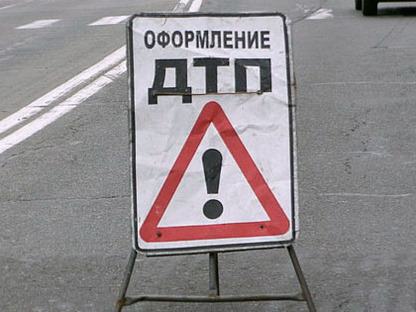
- Ensure safety. Stop, switch on the hazard lights, place the warning triangle and assess the condition of the people involved.
- Call the emergency services if there are injured persons, a hazard, or the conditions for the Europrotocol are not met.
- Record the scene. Photograph the position of the cars, road markings, signs, traffic light, traces, damage and registration plates.
- Write down contact details. Obtain the details of the participants and witnesses, and information on the policies.
- Do not sign anything you do not understand. If you disagree with a document, state your comments before signing.
- Notify the insurer. Use the official channel and keep the reference number.
Europrotocol or standard procedure
For a minor accident the Europrotocol may be used: only two vehicles are involved, both have valid policies, there are no injured persons and no damage to third-party property, there is no dispute about who is at fault, and the damage does not exceed 100 MCI. In 2026 the limit is 432,500 tenge.
If even one condition is not met, or there is doubt about hidden damage, have the accident recorded in the standard manner with the police involved. After payment under the Europrotocol the injured party will not be able to make an additional claim against the insurer above the established limit.
How to file a claim with the insurer
The injured party applies to the insurance organisation where the at-fault party's liability is insured, or to his own company in cases provided for by law. The insurer accepts the application, checks the documents, arranges an assessment if necessary and decides on the payment or a reasoned refusal.
Submit documents against an inventory. Obtain confirmation showing the date and the list of materials accepted. In compulsory motor insurance the company has no right to demand documents not provided for by law.
What evidence is useful
Photos and video
Original files with wide and close-up shots, and dashcam and camera recordings.
Documents
Accident materials, the policy, the application, notifications and correspondence with the insurer.
Assessment
Inspection report, repair estimate, expert opinion and supporting invoices.
Keep the original files and metadata. Do not edit a photograph, and do not forward the only copy through a service that reduces quality. If cameras exist, quickly request that the recording be preserved, as it may be deleted automatically.
Dispute over the amount of damage
Do not repair the car or destroy damaged parts before the inspection unless the insurer has permitted another procedure in writing. During the inspection, check that all visible damage has been entered in the report, and state your comments.
If the amount seems understated:
- request the full calculation with the list of parts, work, wear and tear and prices;
- compare it with the inspection report and the actual damage;
- record hidden defects when the car is dismantled;
- obtain an independent opinion if necessary;
- send the insurer a written request for review.
Expert assessment and the expert institution
The original material raised the problem of conflict between the insurer and the expert institution. An expert must use a verifiable methodology, source data and a reasoned calculation. Disagreeing with a conclusion does not prove that the expert acted in bad faith: an opinion is challenged through questions, a peer review, or a repeat or court-ordered expert examination.
Check the specialist's competence, the list of materials examined, the methodology, photographs, the causal link between the damage and the accident, and the answers to the questions put. Questions to the expert should be worded neutrally, without a predetermined conclusion.
Suspected insurance fraud
Falsifying circumstances, staging an accident, altering documents and inflating damage can have legal consequences. However, an insurer must not base a refusal on supposition alone. Specific facts are needed: technical inconsistency of the damage, contradictions in the data, forged documents or other verifiable signs.
The correct procedure is to preserve the evidence, carry out an internal check within one's authority, request lawful information and, where there are sufficient grounds, contact law enforcement. Putting pressure on a participant yourself or spreading accusations is unacceptable.
Why old recommendations require caution
The 2012 publication used the Russian terms "GIBDD" and "militia" and also made general assertions that officers of these agencies may cover for one another and prepare "the right" answers. Such statements cannot be applied as established fact and cannot be transferred to specific officials without evidence.
The useful idea of the original text remains: a request should be well thought out, and the evidence should be independent and mutually verifiable. But the purpose of a request is to establish the facts, not to confirm in advance one party's version.
How to challenge a refusal or an amount
| Stage | Action | Result |
|---|---|---|
| 1. Insurer | Written claim with documents | Reasoned reply and possible review |
| 2. Ombudsman | Application in the established manner | Out-of-court review of the insurance dispute |
| 3. Regulator | Complaint about breach of requirements | Supervisory assessment within its competence |
| 4. Court | Lawsuit in compliance with procedure | Binding decision on the dispute |
The insurance ombudsman helps to settle disagreements with an insurance company. Prepare the contract, rules, payment application, the insurer's decision, calculations, evidence of the accident and proof of the prior application.
If the at-fault party is not insured
The absence of a policy on the part of the at-fault party does not deprive the injured party of the right to claim compensation for harm. In that case the claim is made against the responsible person under the rules of civil law. The amount of damage is confirmed by an assessment and other evidence; if there is no voluntary payment, the dispute is resolved in the established manner.
Checklist before a claim
Do you have the exact amount claimed, the legal basis, the calculation, proof of filing the documents, photos, the inspection report and the insurer's written decision? A structured claim is considered more effectively than an emotional appeal.
Conclusion
An insurance dispute after a road accident is resolved by evidence and compliance with procedure. Record the accident, notify the insurer on time, and obtain the calculation and a reasoned decision. If you disagree, use in turn a claim, the insurance ombudsman, the regulator and court protection.
This material is for information only and does not replace legal advice. Apply the legislation in force and the terms of the specific contract.